Learn the idea
A class has a topic, a clear example, a guided build, and checkpoints. Lessons connect so the same ideas return in larger systems.
Preparing to open. Classes are not open yet and no venue is secured. Scratch and Robotics are planned first. We will announce the date and location once confirmed. Register interest for launch updates; this is not enrollment.
School of Code / Computer Lab
Classes teach ideas in a planned sequence. The Computer Lab is a planned format, not an open venue. It would offer guided project time: finish a difficult section, change a rule, repair a bug, or build a more ambitious version.
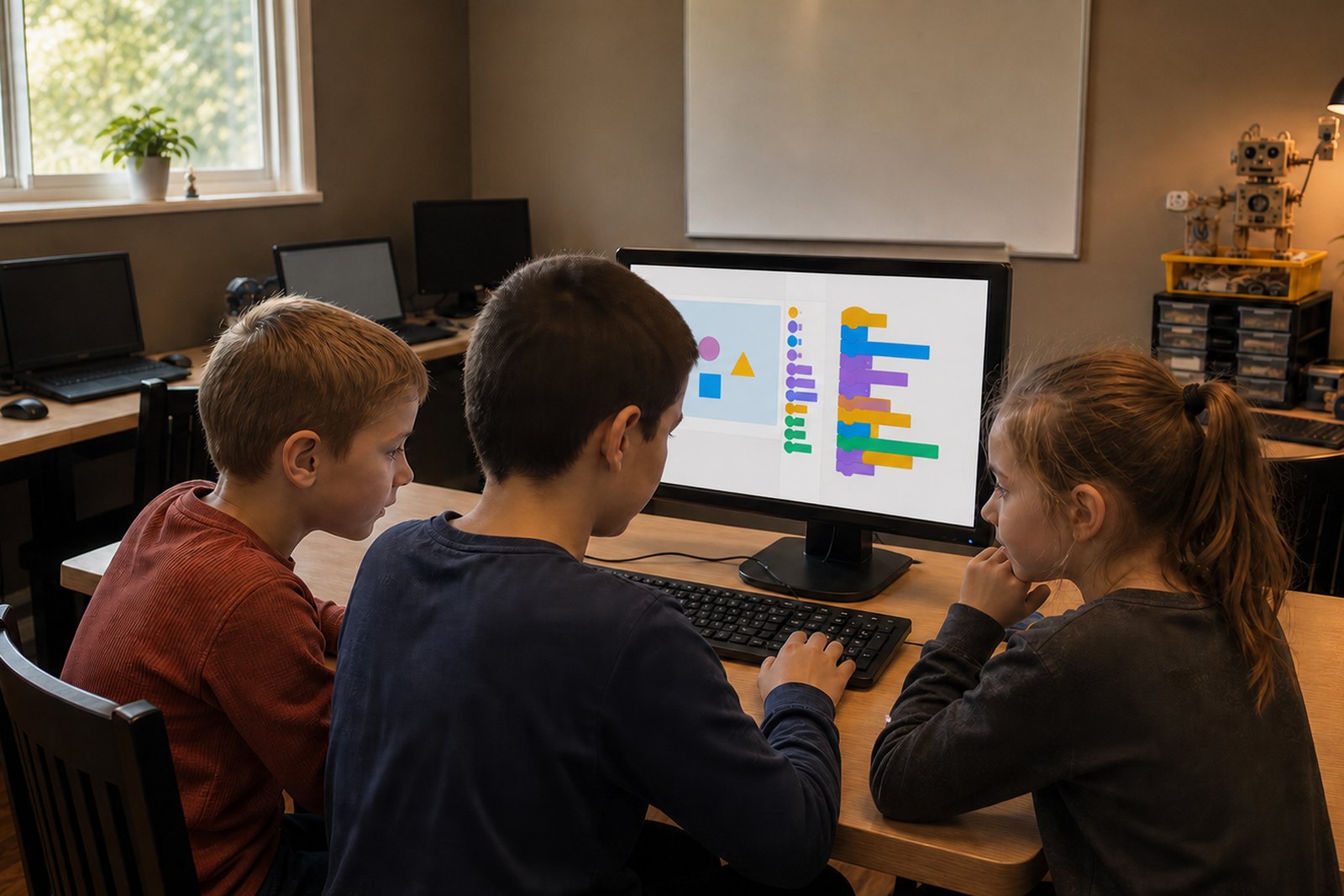
Two kinds of work
A class has a topic, a clear example, a guided build, and checkpoints. Lessons connect so the same ideas return in larger systems.
The student chooses a useful next move and works with an instructor nearby: add a feature, investigate a failure, rebuild a weak section, or prepare a demonstration.
Choosing the work
A half-working project may contain more useful questions than a fresh assignment.
The idea changes form
Known position, x/y movement, boundaries, and visible debugging.
True/false questions, score rules, branches, and reliable reset.
Measurement, thresholds, decisions, action, and rechecking.
Computer Lab projects
Create a virtual pet with needs that change over time and actions that affect more than one value.
See how it worksNavigate a space taxi between coordinate-based pickups and destinations.
See how it worksTrack several drifting chickens, collect them once each, and stay out of the danger zones.
See how it worksTest which materials complete a low-voltage circuit, record the evidence, and investigate readings that do not make sense.
See how it worksDesign a repeating patrol that notices an obstacle, tries a response, and checks whether the response worked.
See how it worksInstructor role
The instructor can narrow the problem, ask for a prediction, point to evidence, suggest a test, or offer a challenge card.
The student makes the decision, changes the project, and explains the result.
Ask how classes and additional project time may fit your child.